Queensland's roofing licences apply here exactly as they do in Brisbane: a QBCC licence for building work over $3,300, held in the roof tiling class or the roof and wall cladding class, and a website that shows your licensed name, the number and that you're licensed under the QBCC Act. Our Brisbane roofers page explains what each class covers, with sources. This section is about what changes on the Gold Coast.
On Christmas Day 2023, storms that built from about 4 pm brought damaging to locally destructive winds across the Gold Coast and the Scenic Rim, leaving a damage path around 3 to 4 kilometres wide and up to 50 kilometres long. The strongest gust officially recorded was 106 km/h at the Gold Coast Seaway, though the damage suggested stronger winds in places, and more than 126,000 customers were without power at the peak. By 29 December the Insurance Council had counted 10,716 claims from the Gold Coast region alone and declared a catastrophe. In August 2024 the Member for Theodore told state parliament that the storm had ripped a track through Logan, the Scenic Rim and the northern Gold Coast, that almost eight months on countless houses across the region still had tarps on their roofs, and that there was a shortage of tradies for the bigger jobs. Ex-Tropical Cyclone Alfred followed in March 2025, when the Insurance Council named the Gold Coast among the most affected areas. A roofer's site here has to work for the night of the storm and for the long months of repairs after it.
Salt is the everyday problem. BlueScope's roofing table, updated in March 2023 and offered as general guidance, measures distance from the high-water mark and separates breaking surf from calm marine water. Near breaking surf it recommends standard COLORBOND steel beyond 200 metres, COLORBOND Ultra beyond 100 metres and SUPERDURA stainless steel closer in; near calm marine water it sets no minimum distance for standard COLORBOND or COLORBOND Ultra roofing. It asks to be contacted about severe industrial conditions, and it defines its categories in a technical bulletin, TB-35. On a coast with surf beaches on one side and the Broadwater, the Nerang River and the canals on the other, it's worth a paragraph, with a link to BlueScope rather than a guess about any one street.
Bodies corporate change who rings you. Queensland's storm guidance for community titles schemes says that in a building format plan the body corporate is likely to be responsible for maintaining the roof, while in a standard format plan owners generally repair the parts inside their own lot if insurance doesn't cover the damage. Committees usually have a spending limit; when urgent work goes over it and there's no time for a general meeting, they can apply to the adjudicator for emergency expenditure, preferably with a committee resolution and at least two written quotes. The same guidance warns that getting tradespeople out after severe weather is likely to be a challenge. A roofer who quotes quickly in writing and says so is answering the committee's real problem.
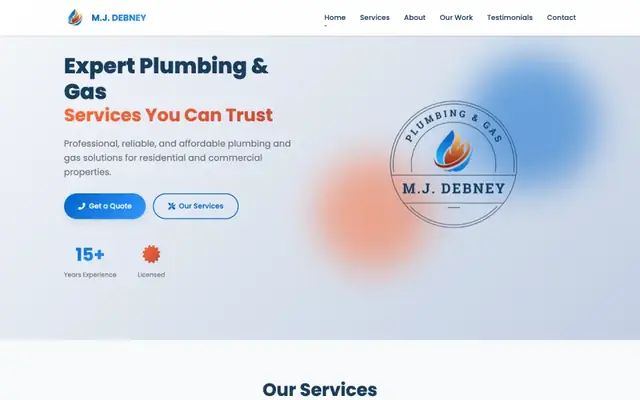
At Coolangatta the state line runs between the twin towns, and roof work in Tweed Heads falls under NSW rules, where roof tiling, roof slating and roof plumbing are separate contractor licence categories once a residential job passes $5,000. The NSW Government says Queensland isn't currently part of automatic mutual recognition, so a QBCC licence doesn't carry across on its own; our Sydney roofers page covers the NSW categories. We're an Adelaide team at Ste 3/110 Hutt St and work with Gold Coast businesses by phone and email. Our Queensland clients include M.J. Debney Plumbing & Gas, and we haven't built a site for a Gold Coast roofer yet. You send your licence details, suburbs and roof photos, we send a draft link, and you pay once you approve it.