Tasmania's rules apply the same way in Launceston as in Hobart, so we've set them out once, on our Hobart NDIS provider page: workers get their NDIS check through a Registration to Work with Vulnerable People, the Disability Rights, Inclusion and Safeguarding Act 2024 counts NDIS-funded providers as disability services providers, restrictive practices need the Senior Practitioner's authorisation, and providers serving children may fall within the state's Child and Youth Safe Organisations Framework. Registration with the NDIS Commission is national and is covered on our main NDIS providers page. What follows is about the north itself.
The NDIA counted 4,767 participants in its North Tasmania district at 30 June 2026. The City of Launceston had 2,425 of them, up from 1,850 four years earlier. Growth has been quicker in some of the surrounding council areas: West Tamar rose from 475 to 708 over the same period, George Town from 182 to 288 and the Northern Midlands from 268 to 393. Meander Valley had 566, Break O'Day 208, Dorset 161 and Flinders 18. A provider based in Kings Meadows or Mowbray may well find a good share of its referrals coming from outside the city council area.
Baptcare is the NDIS community partner for the whole of the north, delivering both local area coordination, for people aged 9 to 64, and the early childhood approach, for children younger than 6 with developmental delay or younger than 9 with disability. Its northern office is on Invermay Road in Mowbray. That makes the north simpler than the south, where two partners divide Greater Hobart by council area. It changes once you head west: the North West district, from Latrobe and Devonport to Burnie and beyond, is served by Mission Australia, so a Launceston provider covering both regions will get referrals from two partner organisations.
Plans in the north lean further towards plan management than anywhere else in Tasmania. At 30 June 2026, 79.1% of North Tasmania's plans were plan-managed, 13.6% fully self-managed and 3.3% NDIA-managed, against 68.8%, 20.8% and 6.0% across Australia. Autism was the primary disability for 43.7% of the district's participants. For a website, this means the plan manager is often the second reader after the family, and a referrals page that answers their questions without a phone call earns its place.
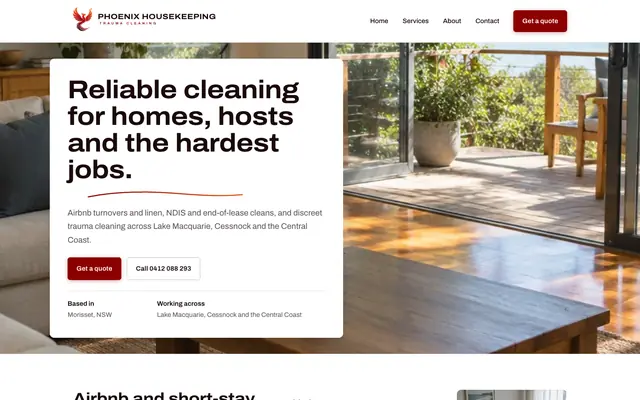
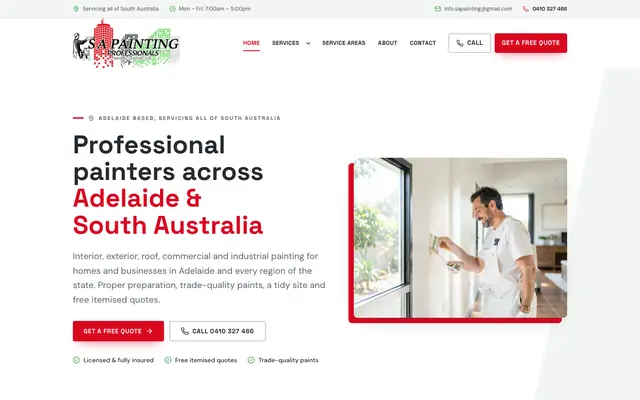
We're an Adelaide team at Ste 3/110 Hutt St, and our work with Launceston providers runs by phone and email. Adelaide sits half an hour behind Launceston all year, as Tasmania and South Australia change their clocks on the same weekends. We haven't built for a Tasmanian business yet, or for one whose main work is NDIS supports, and our current clients are in SA, NSW, VIC and QLD. The two projects below are the closest in what they had to show.