Provider registration with the Aged Care Quality and Safety Commission, Support at Home pricing and published room prices are national; our Sydney aged care page walks through the registration categories. Worker screening is where Victoria's systems come in. Each aged care worker and responsible person needs either a police certificate no more than three years old that doesn't record certain offences, or an NDIS Worker Screening Check, which Victorians apply for through Service Victoria and the state's NDIS Worker Screening Unit assesses; a clearance lasts five years. If you deliver NDIS supports too, the Victorian Disability Worker Commission oversees that side of your workforce, as our Melbourne NDIS page explains.
Councils are a bigger part of the story here than in other states. HACC ran as a joint Commonwealth and Victorian program from 1984 until 2016, when services for people 65 and over moved to the CHSP and the state kept the younger group as HACC PYP. Many councils have since stepped back from delivery: in February 2024 a department official told Senate Estimates that 46 of the 80 councils to leave the CHSP, at least in part, since July 2021 were in Victoria. Councils that don't deliver services can still point people to them. Wyndham, which says it doesn't provide direct support services for older adults, runs a Community Connector program that gives residents and carers personal guidance to reach services, and Monash says it will keep supporting older residents through advocacy, partnerships, information services and community programs. Those staff are worth reaching with a clear page about what you offer in their area.
The figures and the referrers use different maps. The department counts aged care in four metropolitan planning regions: in 2024–25 Southern Metro had 45,884 CHSP users, against 35,494 in Northern, 33,881 in Eastern and 26,031 in Western Metro, and on 30 June 2025 Southern Metro's homes held 12,816 residents. Care finders, who give face-to-face help to older people needing intensive support to use My Aged Care, are commissioned by the three Melbourne PHNs: North Western, Eastern and South Eastern Melbourne. From 1 April 2026 South Eastern Melbourne PHN groups them in three clusters: Inner South (Bayside, Port Phillip, Glen Eira, Stonnington and Kingston) with Bayside City Council and Better Health Network; Outer South (Greater Dandenong, Casey and Cardinia) with Better Place Australia, Each and Mentis Assist; and the Peninsula (Frankston and Mornington Peninsula) with Each and Housing for the Aged Action Group. Post Acute Care areas are set council by council in the state's directory, so a site organised by council area lines up with all three.
For a feedback and complaints page, Victoria has two contacts worth considering beside your own process and the Commission. Elder Rights Australia, which some Victorian Government pages still list as Elder Rights Advocacy, answers the Aged Care Advocacy Line on 1800 700 600 from 8am to 8pm on weekdays and 10am to 4pm on Saturdays. Seniors Rights Victoria (opens in a new tab) runs a helpline on 1300 368 821 and a community legal service for Victorians aged 60 and over, or Indigenous Victorians from 45, who are concerned about elder abuse. Complaints about the handling of health information go to the Health Complaints Commissioner.
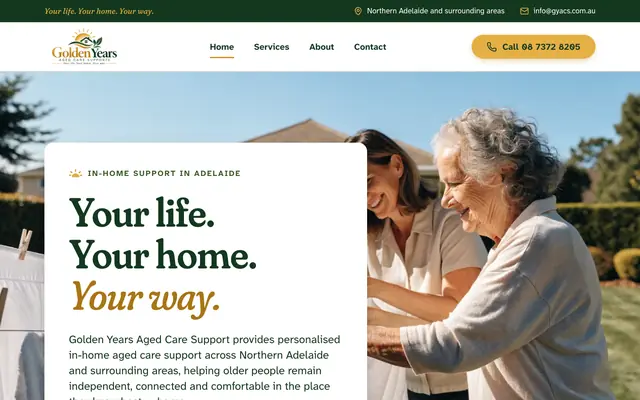
We're an Adelaide team at Ste 3/110 Hutt St and work with Melbourne providers by phone and email. We haven't built for a Melbourne aged care provider. Our Melbourne client is Dr Tabara Dione Coaching, a coaching practice for doctors, and our aged care client, Golden Years Aged Care Support, works across Northern Adelaide.