Different legislation from NSW and Victoria. Queensland solicitors practise under the Legal Profession Act 2007. Queensland Law Society issues practising certificates, which are renewed each May, and the Legal Services Commission is the independent body that deals with complaints about Queensland lawyers. The Australian Solicitors' Conduct Rules 2023 (opens in a new tab) came into force in Queensland on 27 September 2024. Rule 36 covers a firm's website: advertising must not be false, misleading or deceptive, or likely to mislead or deceive, and a solicitor must not convey a false, misleading or deceptive impression of specialist expertise. QLS's ethics guidance adds that saying you “specialise” in an area is likely to be read as a claim to expertise, not just a description of the work you usually do.
The injury advertising statute. Chapter 3, Part 1 of the Personal Injuries Proceedings Act 2002 (opens in a new tab) treats any statement likely to encourage someone to claim compensation or damages for a personal injury, under any Act or law, or to use a particular lawyer for that claim, as advertising personal injury services, and that expressly includes statements on a website. Section 66 generally limits such advertising to a lawyer's name, contact details and areas of practice, published by an allowable method, and gives advertising on a “no win, no fee” or other speculative basis as an example of the advertising it restricts. A firm's own website may go further only with statements limited to the operation of the law of negligence and a person's rights under it, and the conditions on which the firm is prepared to act. The maximum penalty is 300 penalty units, and a practitioner can also be charged with misconduct. In May 2026 QLS's Proctor reported a QCAT decision reprimanding a principal over statements on a firm's website, in which the judge called the provisions difficult to interpret. The Legal Services Commission says it is reviewing its PIPA materials. We publish only wording you approve and point you to QLS or the Commission; we don't give compliance advice.
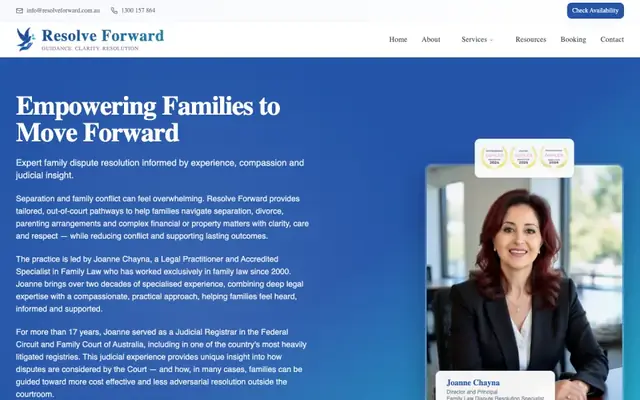
Specialist accreditation. QLS has run its accreditation scheme since 1995, with areas including family, criminal, property, succession and personal injuries law. Accreditation belongs to the individual solicitor, who must keep practising in the area for at least 25% of full-time practice and complete 15 CPD points a year, 10 of them in that area. QLS's Accredited Specialist style guide sets out correct and incorrect wording (“Accredited Specialist in Family Law”, not “Specially Accredited”) and the post-nominal for each area. The public can search QLS's register for accredited specialists by area of law and location, and QLS keeps records of all current Queensland practitioners, so a link from each profile lets a careful client check.
Brisbane's courts. The Supreme and District Courts and the Planning and Environment Court registry are in the QEII Courts of Law at 415 George Street. Brisbane Magistrates Court is up the road at 363 George Street and is one of six places where Queensland runs a specialist domestic and family violence court; Murri Court sits there and at Richlands and Wynnum. Family law matters go to the Federal Circuit and Family Court in the Harry Gibbs Commonwealth Law Courts at 119 North Quay. Away from the city, Brisbane City has Magistrates Courts at Holland Park, Richlands, Sandgate and Wynnum, and the North Brisbane Law Association is one of the district law associations QLS lists for local practitioners.
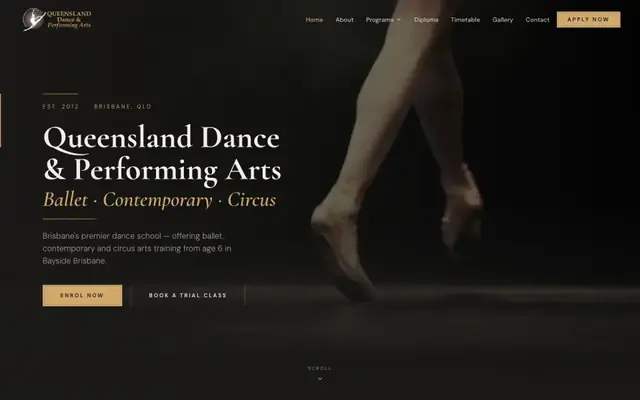
Working with us. We're an Adelaide team at Ste 3/110 Hutt St and work with Brisbane firms by phone and email. Queensland Dance & Performing Arts on Brisbane's Bayside is one of our clients; we haven't yet built a site for a Queensland law firm. Partners can open the draft link between client meetings, and the firm pays nothing until it approves the site.