Registration and permits in brief. In WA, building work that needs a building permit and is worth $20,000 or more has to be carried out by a registered building contractor, and section 8 of the Building Services (Registration) Act 2011 puts the contractor's registration number in its advertising, websites included. Our page for Perth builders covers registration and home indemnity insurance in more detail. For landscapers the usual triggers are walls, fences and pools. The Building Regulations 2012 exempt a retaining wall from a building permit only when it holds back no more than 0.5 m of ground and isn't tied to other building work or to protecting the land next door, and the City of Fremantle says it wants every retaining wall, whatever its height, designed by a practising structural engineer. Fences lose their exemption above 0.75 m for masonry and 1.8 m for other materials, and whenever they form part of a pool barrier. Councils then inspect pool barriers at least once every four years under regulation 53, which is worth a line on your site if you landscape around pools.
Water rules that shape the job. Perth and Mandurah share one set of sprinkler rules, set by Water Corporation: two rostered days a week, once a day before 9am or after 6pm, and a full sprinkler switch-off from 1 June to 31 August, though hand watering stays allowed. Two exemptions are written for the trade. Businesses in the turf, garden and landscaping industry can apply 10 mm of water straight after a wetting agent, fertiliser or vertimowing, which general customers can't. Irrigation installers can water to the minimum extent needed for installation, repairs and testing, capped at two minutes per station, with an authorised sprinkler testing sign on display. A line on your retic page explaining why a test might run outside the roster saves an awkward call from a neighbour.
Waterwise and the industry body. Water Corporation says the Landscaper and Garden Design training covers water-efficient design, irrigation basics and keeping a waterwise landscape going, and the program sets basic standards for plant selection, soil improvement, mulching, turf and bore use. Irrigators endorsed under the Garden Irrigator program get preferred supplier status for Water Corporation's rebate programs, and those offers change over time, so a rebate mention on your site needs a link to the current offer rather than a fixed promise. The Landscape Industries Association WA (LIAWA) keeps a Find a Professional directory and runs annual awards: its 2026 Resi-scape Awards had categories for residential design and construction, landscape maintenance and greenlife supply. If you've won one, put it on the project page for the garden that won it, with the year and the category.
Verges differ from one council to the next. The City of Stirling's verge policy lets owners lay lawn, low plants and organic mulch without approval, but paving, synthetic turf and in-situ concrete need written approval first, can cover no more than a third of the verge, and must sit at least 2 m from a street tree; plants have to stay below 750 mm. The Town of Claremont's 2023 guidelines rule out artificial turf, suggest plants no taller than 0.5 m, and ask for any reticulation to run down the middle of the verge on the Water Corporation roster. In a September 2024 response to the media, the City of Cockburn said it doesn't support synthetic grass across a whole verge and that approval is needed once more than 25 per cent of the verge is hard surface. Listing the councils you work in, and saying you check before you quote, is more use to a client than a general line about verge gardens.
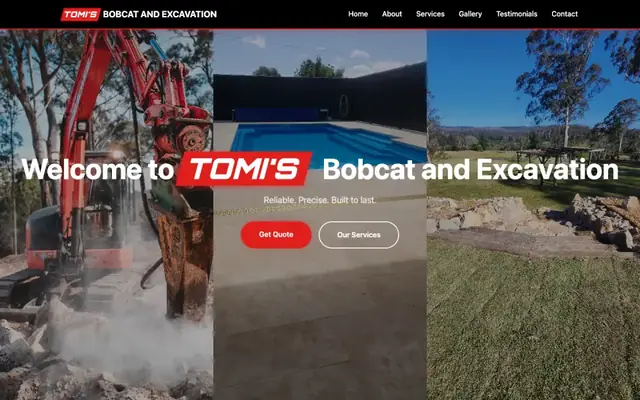
Infill, and working with us. Since 10 April 2024, the revised Residential Design Codes have required new trees and deep soil areas in medium density developments, which take in single houses coded R50 and above, grouped dwellings coded R30 and above, and multiple dwellings coded R30 to R60. If you landscape townhouses and small-lot homes for builders or owners, a page showing that work, deep soil and new trees included, speaks to it directly. We're an Adelaide team and work with Perth businesses by phone and email. Adelaide is 1.5 hours ahead of Perth, or 2.5 while South Australia is on daylight saving. We haven't built for a WA landscaper yet, so the examples below are from New South Wales and South Australia.