Wiring and connecting a solar or battery system is electrical wiring work in NSW, so the business contracting for it needs a contractor licence, and NSW Fair Trading's advertising guidance asks for the licensee's name, the licence number with its category of work, and a business phone in internet ads as well as print. Our Sydney electricians page covers that and the compliance certificate in more detail, and our solar installers page explains the national accreditation side. What's particular to Sydney is the grid. Endeavour Energy lists the Blacktown, Cumberland, Parramatta, The Hills, Hawkesbury, Penrith, Blue Mountains, Fairfield, Liverpool, Camden, Campbelltown and Wollondilly councils among those in its franchise area. Most of the rest of Sydney is on Ausgrid's network, which also takes in the Central Coast and the Hunter. If you install on both networks, grouping your service areas by network saves customers a question.
The Emergency Backstop Mechanism is a last-resort measure, required by the Australian Energy Market Operator, for rare emergencies known as minimum system load events; both networks say it will only be used to keep the lights on if nothing else is working. It's being phased in by postcode from November 2026: new and upgraded systems up to 200 kW are registered in the NSW CER Installer Portal, use CSIP-AUS compliant equipment and pass a short capability test over the internet at installation. Existing systems aren't affected, and embedded network customers and like-for-like warranty replacements are exempt. Ausgrid has also applied two-way pricing to all export-ready residential and small business customers since July 2025: the first 200 kWh exported between 10 am and 3 pm each month is free (192 to 212 kWh, depending on the month's length), exports above that cost 1.23 cents per kWh, and each kWh exported between 4 pm and 9 pm earns a 3.85 cent credit. Retailers decide how much of that reaches the bill, so a battery page should describe the evening credit as a network price, not a promised saving.
Then there's strata. The NSW Government counted more than 87,000 strata schemes in early 2025, home to about 1.2 million people, and since 1 July 2025 a by-law can't block solar panels or other sustainability infrastructure on common property because of how they look, unless that property is heritage listed or in a heritage conservation area. Shared rooftop systems on those buildings are what the Solar for Apartment Residents grants pay towards: up to half the eligible cost, or up to 80 per cent under the Boost stream in selected suburbs, for Class 2 apartment buildings and strata townhouses with a shared roof. The Australian Government funds the grants and the NSW Department of Climate Change, Energy, the Environment and Water runs them. Owners must pass a sustainability infrastructure resolution at a strata meeting before the stage 2 application, the system has to pay for itself within 10 years, and the grant is worked out on the total system cost after the STC discount and excluding GST, so quotes need to show that breakdown and the final net cost. Applications close at 5 pm on 4 December 2026, or earlier if the money runs out, and projects must be finished by 30 April 2027.
Council rules shape the inner-city jobs. Inner West Council says approval generally isn't needed for a system that sits outside heritage items and conservation areas, projects no more than 0.5 metres from its point of attachment and isn't mounted on the ground, with the full test set out in the Transport and Infrastructure SEPP. Where a DA is needed, it waives the fees for solar-only applications. It names slate and Marseille tile as high heritage value roofing, and suggests putting panels on rear additions, secondary wings or outbuildings, in roof valleys or behind parapets, out of sight of the main road. The City of Sydney lets owners in its conservation areas skip a DA by lodging a heritage works exemption form, but the council must reply in writing before work starts, and slate or timber-shingle roofs and complex street-facing roofs don't qualify. On a street-facing roof, panels can sit no more than 250 mm above the roof plane and must stay 300 mm clear of the ridge, and batteries can't go on a wall facing the primary street.
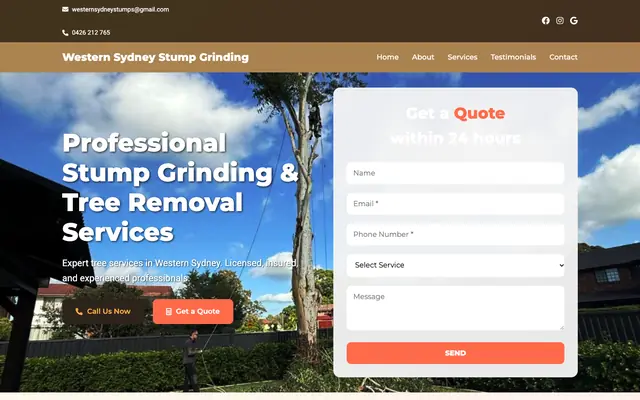
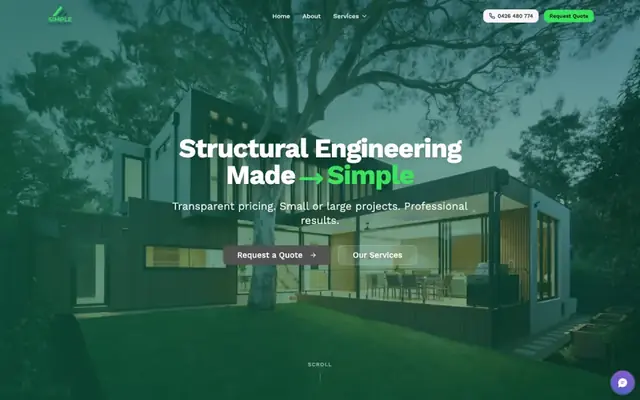
We're a web design team on Hutt St in Adelaide and work with Sydney businesses by phone and email. We haven't built a website for a solar or battery company, and our portfolio doesn't pretend otherwise. What we can show is a Western Sydney trade site, a quote form that takes uploaded files, and a suburb and postcode search, which are the pieces a solar site here is assembled from.