Licences. The NSW EPA licenses pest controllers under the Pesticides Regulation 2017. A pest management technician licence covers applying pesticides, other than fumigants, to control pests for a fee. A timber pest management technician licence adds termites and other timber pests: anyone who renewed or first took out a licence after 17 December 2021 needs it for timber pest treatments, and a five-year pest management technician licence held before that date covers them only until it expires. A separate fumigator licence covers products such as methyl bromide, sulfuryl fluoride and anything that releases phosphine. Trainees work under a training permit and a licensed supervisor, licences run for one or five years, and every one is listed on the EPA's public register. Technicians licensed in another state may be able to work in NSW under automatic mutual recognition, but the EPA excludes Queensland licences from that. If you do bird control, products containing alphachloralose or 4-aminopyridine are restricted to technicians who have completed bird management training, and the EPA suggests customers ask to see proof.
Records and notices. Every application has to be recorded within 48 hours, covering the product, the rate, where it went and the equipment used, and the record kept for three years. Part 5 of the regulation makes notice compulsory when you treat the common areas of a multiple occupancy residential complex, and before you apply pesticide within 20 metres of a shared boundary with a school, hospital or childcare centre. You don't have to publish any of this, but one sentence saying you give these notices and keep these records tells a strata committee or a childcare director that you know how NSW works.
Buyers and renters. NSW has no cooling-off period when a home is bought at auction, and the NSW Government tells bidders to get professional building and pest reports before they bid. Its guidance also notes that a building report should pick up visible termite damage but won't say whether termites or other timber pests are still present, so a separate pest inspection is worth having. When a buyer asks for the contract, the selling agent must disclose the pest reports they know about, including who prepared each one, that person's business contact details, whether they hold professional indemnity insurance and whether the report can be bought again. For rentals, NSW Fair Trading says landlords are generally responsible for pests already present when a tenancy starts, and tenants for infestations their own activities or cleanliness cause after they move in; disputes go to Fair Trading's dispute resolution service.
Food businesses. The NSW Food Authority publishes a register of penalty notices issued to food businesses, searchable by suburb, postcode and council. Notices served in June and July 2026 by the City of Sydney, Inner West, North Sydney and The Hills Shire councils were for failing to take all practicable measures to eradicate and prevent the harbourage of pests, one of them after a previous warning. An owner in that position wants to know how a regular service works and what your reports record, which is why a page written for them belongs on the site.
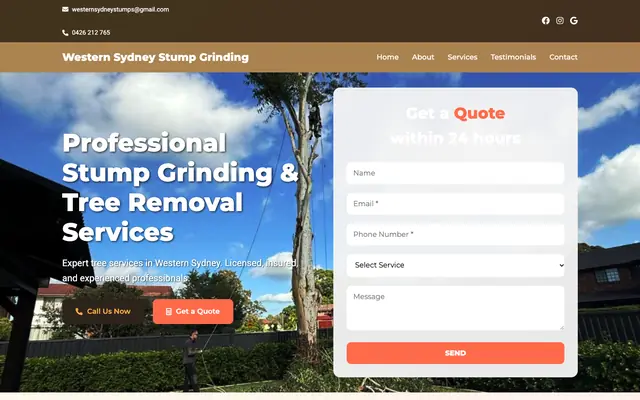
Funnel-web country and the suburbs you cover. The Australian Museum puts the Sydney funnel-web's main range from the Central Coast south to the Georges River, reaching west to Baulkham Hills, and says males wander mostly over summer and autumn, ending up in backyards, pools and houses. The Australian Reptile Park at Somersby relies on donated spiders for its antivenom program, collects them through drop-off points that include Hornsby and Sutherland hospitals, and tells anyone not confident catching one to contact a licensed pest controller. If you take those calls, a seasonal notice saying so is more useful than a generic spider paragraph. Beyond that, Sydney people search by suburb and council area, and your reach for an urgent rodent or wasp call is shorter than for a booked termite inspection, so we'd set out two zones, a tighter one for same-day call-outs and a wider one for booked work, each named in the suburbs and council areas people use, such as Hornsby, Ku-ring-gai, Canterbury-Bankstown or the Inner West. Our team is based on Hutt St in Adelaide; Sydney clients such as Western Sydney Stump Grinding work with us by phone and email, see a draft link first and pay only once they approve it.