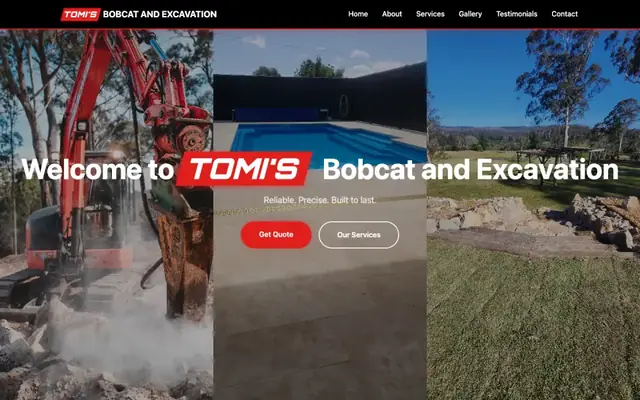
The QBCC concreting licence. Queensland licenses concreting as a trade class, and the QBCC sums up its scope in one line: concreting, including installing formwork, reinforcement and concrete. It's issued at contractor, nominee supervisor and site supervisor level, contractors and nominee supervisors also need the managerial unit BSBESB402, and a licence is needed for building work valued over $3,300. A concreting licensee can take on incidental work from another class only where that work is valued under $3,300 and isn't occupational work such as plumbing, drainage or pest control. Websites, social media pages, directory listings and vehicle signage all count as advertising under the QBCC's rules, which ask for the licensed name, the licence number and a statement that you're licensed under the QBCC Act; our Brisbane builders page goes through those rules and the home warranty questions owners raise.
Brisbane's driveway permit. Building, repairing or modifying the crossing between the road and a property needs a permit from Brisbane City Council, and council makes property owners responsible for building and maintaining the driveway, including the kerb and channel beside it. There are two routes. Self-assessment issues a permit straight away when the crossover keeps clear of what's on the verge: 2 metres from a cylindrical street tree trunk, 5 metres from a buttress trunk or outside its drip line, 600 mm from a stormwater drain or another organisation's asset such as a hydrant or water meter, 1 metre from a light or power pole, 500 mm from a street sign or electrical pillar, 10 or 20 metres from a minor or major intersection, and 20 metres from the approach to a bus stop. It also limits the width to 3 metres on a lot under 450 m², and to 4 metres for a single garage or 5 metres for a double on larger lots. An extra driveway, or one that means moving a council asset, goes to full assessment: the owner sends a site plan showing the frontage, a north point, the width, nearby assets and the proposed finish, with photos, and council aims to reply within 20 working days and may inspect the site. Residential driveway permits are valid for 12 months from issue.
What council expects on its side of the boundary. Council's technical driveway standards call for N25 concrete to AS 1379 and AS 3600, a 125 mm slab and 10 mm full-depth closed-cell polyethylene foam expansion joints, and name stencilled or broom-finished concrete as the preferred surfaces. Pavers must be at least 40 mm thick and concreted to the base, asphalt is allowed only in non-urban areas, and tiles, gravel and bluestone aren't accepted. The crossing has to sit level with the verge or footpath, with a gradient no steeper than 1 in 6 outside the boundary and 1 in 4 inside, changing by no more than 1 in 12 over at least a metre. Some jobs bring in someone other than council: Economic Development Queensland issues the permit where a development approval in a Priority Development Area conditions the crossover, the Department of Transport and Main Roads deals with access from a state-controlled road, and Urban Utilities handles moving a water meter or sewerage maintenance hole. Leaving materials on a footway outside the CBD for less than 48 hours needs no approval, as long as it isn't on a state-controlled road and 1.2 metres stays clear for people walking in residential streets.
Slabs, pipes and the pour itself. Council stormwater pipes can run under the street, through private yards or along drainage easements. Where building work over or near them falls under the Queensland Development Code's MP 1.4, council acts as a referral agency, and the request needs plans signed by an RPEQ engineer, a detailed survey with CCTV footage of the pipe and a confirmation notice from the building certifier; council says its community maps show only approximate locations, and that information taken from them or from Dial Before You Dig won't be accepted as evidence of where a pipe sits. Building over or near sewer and water pipes goes to Urban Utilities rather than council. On site, council says a project involving soil-disturbing works must show erosion and sediment control measures are in place, and it can issue on-the-spot fines under the Environmental Protection Act 1994, which names concrete, earth and building waste as prescribed water contaminants that mustn't be deposited in roadside gutters, stormwater drains or waterways. Dig-outs carry one more Queensland obligation: the state treats soil as a high-risk carrier of fire ants, so carting spoil away from a driveway or slab excavation comes with rules, which our Brisbane landscapers page sets out.
Where you pour, and how we work with you. Everything above is Brisbane City Council's. If you also pour in Logan, Ipswich, Moreton Bay or the Redlands, those are separate councils with their own approvals, so a service-area section can name the parts of Brisbane you cover, north, south, west or bayside, and the neighbouring council areas you travel to, and the quote form can ask for the suburb so you know whose rules apply before you call back. We're an Adelaide team at Ste 3/110 Hutt St and work with Brisbane businesses by phone and email; M.J. Debney Plumbing & Gas, a licensed Queensland plumber and gas fitter, is one of our clients. You send your licence details, the suburbs you want more work in and photos of finished pours, and we send a draft link you can check between jobs.