Brisbane City Council's Eat Safe Brisbane scheme rates each licensed food business after an Environmental Health Officer has inspected the premises, talked to staff, checked records and watched the work. On council's ratings page, three stars means a good level of compliance with the Food Act 2006, four a high level and five full compliance. Two stars or fewer can't be displayed. Display is voluntary, and council won't publish your rating in its online star search without your agreement. A higher rating also means fewer audits. If you've lifted your practices, you can apply for a reassessment, after three months for a rating of two stars or below, or six months for three stars and above. Council's terms for the logo add the detail that matters for a website: you need a current Brisbane City Council food licence and a signed Eat Safe agreement, and the logo has to come from council's original artwork, not a redrawn, cropped or scanned copy.
Not every Greater Brisbane cafe falls under that scheme. Logan City Council runs Eat Safe Logan, which inspects every licensed food business in the city and rates it from zero to five stars; showing the rating at your premises is voluntary, and businesses on three stars or more can choose to be listed on council's website. Ipswich runs Eat Safe Ipswich, where only businesses with three or more stars may choose to show theirs. So a cafe in Springwood or Springfield Lakes shows its own council's rating, never Brisbane's. Where a council doesn't run a star scheme, we leave ratings off the site rather than hint at one.
Footpath tables come under council's Footpath Dining Local Law 2011. Council's permit page says you'll need a food business licence and $20 million public liability insurance naming council, plus Department of Transport and Main Roads approval if you're beside a state-controlled road; tables on your own private land don't need a permit. The Queen Street, Brunswick Street (with Beirne Lane) and Chinatown malls use separate permits under the Public Land and Council Assets Local Law 2014. Council asks for good-quality furniture there, not cheap moulded plastic, and umbrellas with at least 2.3 metres of clearance. Dogs are a separate question. Queensland Health's guidance on dogs in outdoor dining areas leaves the decision to you. It asks owners to keep their dog tethered or close, stop it eating from plates and take it away from the premises to relieve itself.
Growing groups have one more rule to think about. Queensland Health's kilojoule menu labelling applies to chains selling standard food items at 20 or more outlets in Queensland or 50 or more nationally, and it names coffee and bakery chains among its examples. Each standard item must show its average kilojoules, along with the statement "the average adult daily energy intake is 8,700 kJ". That goes on menu boards and printed menus, and on online ordering websites and apps as well. Mobile food vehicles, dine-in-only restaurants and businesses mainly in catering are exempt. A business outside the rule may show kilojoules voluntarily, but only in the way the Act requires. For an independent with one or two cafes, the online menu needs prices and dietary notes, not kJ figures.
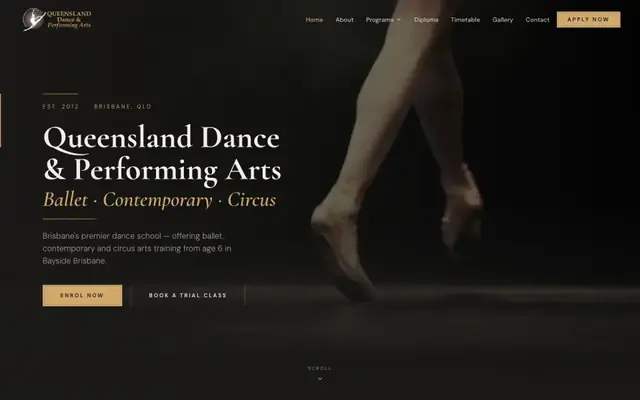
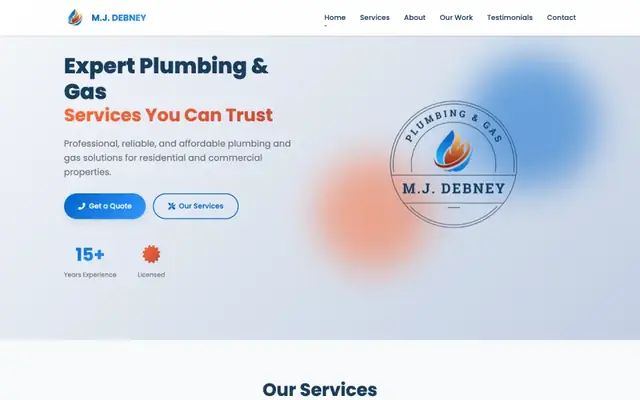
We're an Adelaide team and work with Brisbane businesses by phone and email. Our Queensland clients include Queensland Dance & Performing Arts in Thorneside, on the bayside, and M.J. Debney Plumbing & Gas. Neither is a cafe, and we haven't built a cafe site yet; the work section below says so. You send your menu, hours, photos and star certificate, we lay them out as a draft you can check on your phone, and you pay once you approve it.