The statewide rules are set out on our Hobart plumbing page: CBOS licenses the contracting business and the individual plumber separately, plumbing work falls into risk categories under a Director's Determination, and TasWater looks after the mains while owners look after the pipes on their side of the connection point. In Launceston, the permit authority is the City of Launceston, which asks to be contacted before plumbing work is carried out. Its plumbing officers inspect notifiable and permit work at the mandatory stages, before work is covered or backfilled and when it's finished, and inspections are booked by email or phone.
The City of Launceston describes its combined sewer and drainage system as almost unique to Tasmania and Australia. In parts of West Launceston, South Launceston, Newstead, East Launceston, Launceston city, Invermay and Mowbray, sewage and stormwater share one pipe network in the older streets. Under the Water and Sewerage Industry Act 2008, TasWater is responsible for stormwater within the combined area, while the council runs the public stormwater system everywhere else under the Urban Drainage Act 2013. Stormwater from the low-lying areas has to be pumped up and over the levee system, and the council's mapping platform shows whether an address is inside the combined area.
Separately, the City of Launceston is running sewage intrusion investigations across the city under the River Health Action Plan, which was developed in December 2017 as part of the Launceston City Deal. Council staff or contractors may ask to enter properties for dye testing, which means pouring dye into sewerage connections so crossed connections can be pinpointed below ground. The council says the property owner is responsible for a crossed connection, that an owner who leaves one unfixed may be in breach of the Urban Drainage Act 2013, and that once one is identified on a property the sewage intrusion must be fixed within 28 days. A plumber who does this drainage work has a reason to say so on the site that plumbers in most other cities don't.
Most of the urban area is in the City of Launceston, taking in suburbs from Mowbray and Rocherlea to Trevallyn, Kings Meadows and Youngtown. Riverside and Legana are in West Tamar Council, Blackstone Heights, Hadspen and most of Prospect Vale are in Meander Valley, and Perth, Longford and Evandale are in the Northern Midlands. Each council is the plumbing permit authority for its own area. Out past the sewer, the City of Launceston requires a plumbing permit, with a site and soil evaluation and design from a qualified person, before an onsite wastewater system goes in, and systems that need ongoing maintenance must be commissioned by a licensed person. Rainwater tank overflows must run to the property's stormwater system or another outlet a council plumbing officer approves. Tas Gas Networks lists new subdivisions in Prospect, Kings Meadows and Summerhill where mains gas is now available, but not every street fronts its pipeline, and its pipeline locator lets an owner check their address.
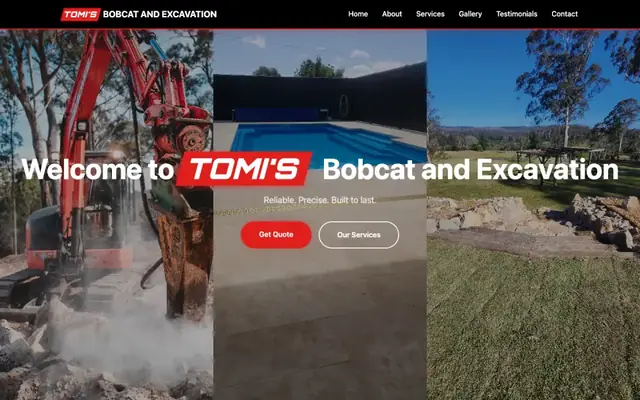
We're an Adelaide team and work with Tasmanian businesses by phone and email, at the same prices we charge everywhere. We haven't built a site for a Launceston business yet. Our current clients are in SA, NSW, VIC and QLD, and the work below includes a regional NSW trade based a long way from any capital city, which is where Launceston plumbers work too.