The statewide rules are set out on our Hobart electricians page. In short, CBOS licenses the electrician and the contracting business separately, every job ends with a record of electrical work, notifiable work needs a Certificate of Electrical Compliance sent to TechSafe Australia within three days of being energised, and TasNetworks handles solar connection applications across the state. Northern contractors don't have to post their certificates south: as well as email and post, CBOS lists a drop box at Henty House, 1 Civic Square, Launceston.
Poles on private land are their own kind of work once you leave the suburbs. TasNetworks says private electrical infrastructure generally begins at the first pole on a property and takes in the lines, poles and equipment beyond it, and that the owner has to keep it in safe working order, fix any defects and keep vegetation at least 3 metres clear of overhead lines. Private poles carry a 'private pole' label about 1.5 metres from the base. TasNetworks inspects them on a five-yearly cycle, and if it finds a safety issue the Department of Justice notifies the owner and explains what maintenance needs to be done. TasNetworks also asks owners to watch for significant leaning, missing nuts and bolts, loose steelwork, wires too close to the ground and broken insulators, to call an authorised contractor for repairs straight away, and points them to the list of private powerline contractors on the CBOS website. A pole page that uses those same words, and says which of those faults you repair, is what an owner holding the letter is looking for.
Heating has a particular history here. In the winter of 2001 Launceston began a set of measures against wood smoke: community education campaigns, enforcement of environmental regulations and a wood heater replacement programme. A study published in the BMJ in 2013 found the replacement programme greatly accelerated the move from wood to electricity as the main source of home heating. By its end, wood stoves had fallen from 66% to 30% of Launceston households, and mean winter PM10 levels had dropped from 44 to 27 micrograms per cubic metre, comparing 1994 to 2000 with 2001 to 2007. Wood smoke is still on the council's agenda: in March 2026 the City of Launceston asked residents about their wood heater use as it works towards a domestic wood smoke plan. An electrician who wires heat pumps has a local reason to give heating its own page, rather than a line in a list of services.
The City of Launceston takes in the urban core, from Mowbray, Rocherlea and Newnham in the north to Kings Meadows in the south, with Trevallyn to the west. Past its boundary, Legana and Riverside are in West Tamar, Hadspen, Blackstone Heights and almost all of Prospect Vale are in Meander Valley, and Perth, Longford and Evandale are in the Northern Midlands. North of the city on the eastern side of the Tamar, George Town Council includes George Town, Low Head and Bell Bay, an industrial centre and port where an aluminium smelter has operated since 1955. Rio Tinto announced on 1 October 2026 that it had reached agreements with the Australian and Tasmanian governments, with Hydro Tasmania supplying power, to keep the smelter running until the end of 2031. Contractors who do industrial maintenance in the Tamar should present that work separately from household jobs.
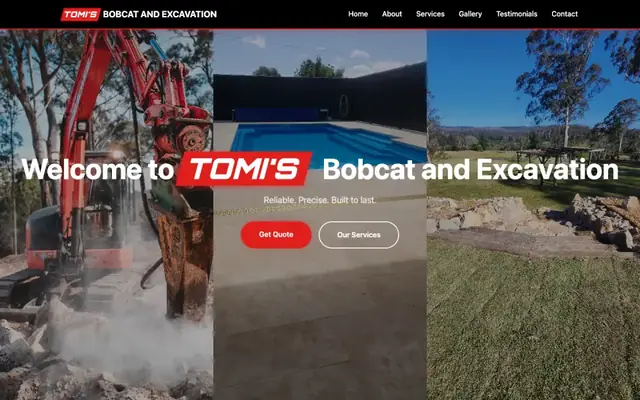
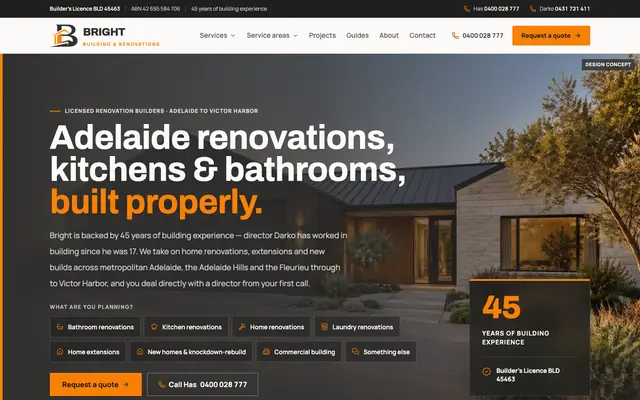
We're an Adelaide team on Hutt St and work with Tasmanian businesses by phone and email, at the same prices as everywhere else. We haven't built a site for a Launceston business or for an electrician yet, so the examples below are a regional NSW earthmoving business and an Adelaide builder whose service area runs into the hills and down to the Fleurieu.